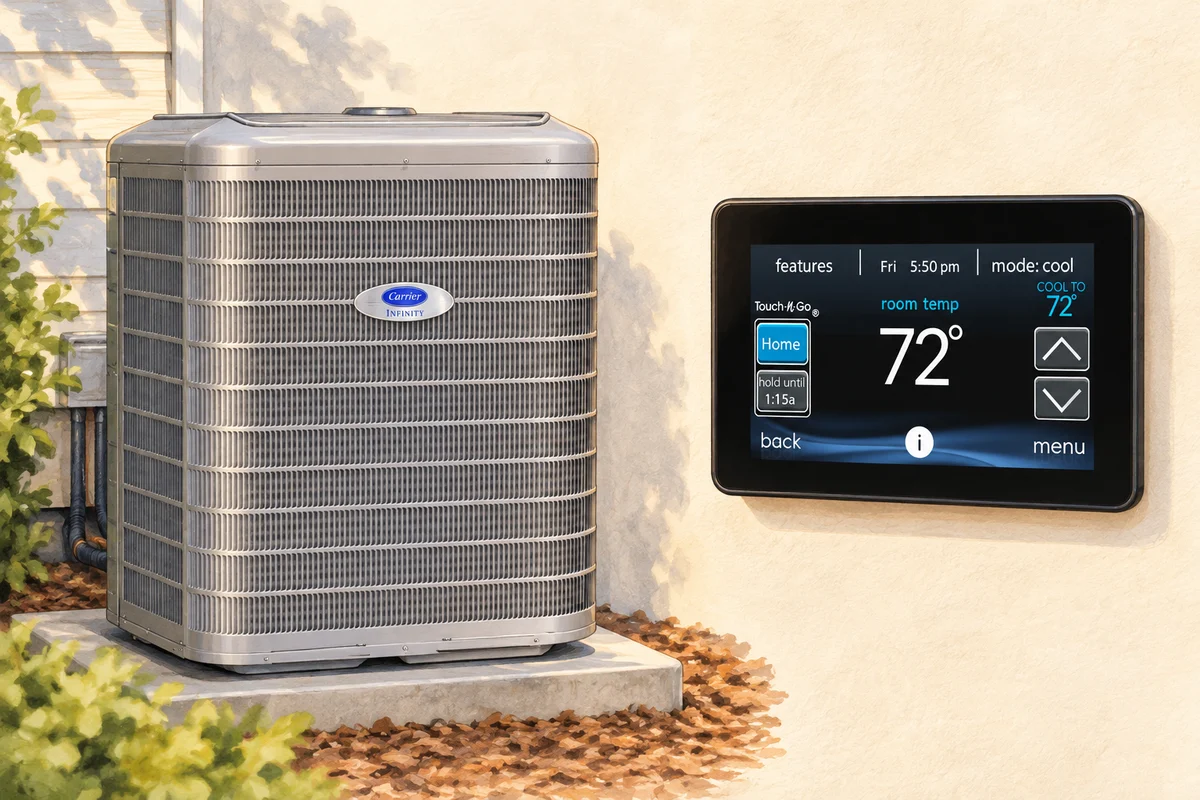
When does it start and stop?
Notice whether the fan, outdoor unit or entire system stops, and whether the thermostat still calls for cooling. A quick note about the weather, room temperature and timing can help explain the behavior.
Cycling by itself does not identify a failed part. Controls, airflow, equipment condition and sizing can influence operation. Variable-speed equipment can also operate differently from an older single-stage system.
Check the thermostat and filter
Review the cooling mode and schedule. Look for a temperature change caused by a programmed schedule or a thermostat setting you did not expect. Check the condition of a safely accessible filter using the equipment instructions.
Keep supply and return openings unobstructed. Do not close many registers in an attempt to push all the cooling into one room, and do not bypass switches or open electrical compartments.
Know when to stop restarting it
If the breaker repeatedly trips, leave the system off and arrange service. Visible ice or repeated shutdowns also need investigation rather than repeated restarts. Note any displayed fault code without trying to clear it through unfamiliar menus.
A technician may need to check the starting sequence, controls, airflow and electrical or cooling components. ENERGY STAR includes system startup, operation and shutdown among professional maintenance checks.
Ask what’s causing the problem
Ask which finding explains the cycling and how the proposed repair will be checked afterward. If sizing or ductwork is part of the concern, request that explanation before committing to replacement.
RJ Sam’s works on the system already in your home, across brands. Describe the pattern as best you can and we’ll explain the appropriate next step.