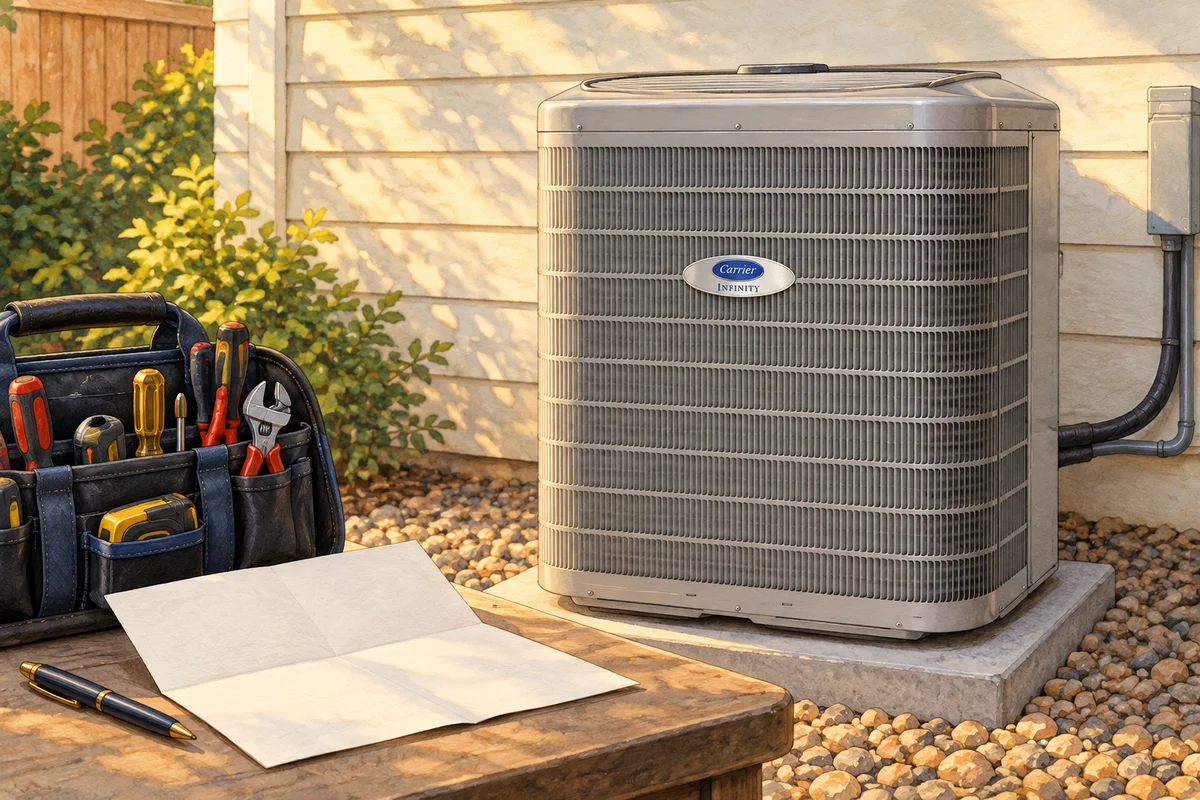
What’s causing the problem?
A warm house does not automatically mean the AC needs replacement. Ask what the diagnosis found, which part or condition is responsible and what a repair is expected to address.
If refrigerant is involved, ask whether a leak has been identified and what the proposed work does about it. The diagnostic visit and the repair are separate parts of the decision.
How well has your AC been working?
Past repairs, current condition, comfort and available compatible parts help shape the comparison. An age-based rule cannot account for every home or fault.
Think about how well the system served your home before the problem. Rooms that have always been hot may need airflow or building-envelope work in addition to equipment repair or replacement.
Look at the full installation price
Ask how capacity was determined. ENERGY STAR recommends sizing heating and cooling equipment for the home rather than assuming that a larger unit is better.
A replacement proposal should identify the outdoor and indoor equipment, controls and supporting work. Duct connections, electrical work, drainage, access and startup checks affect both the price and the result.
Ask what each option will change
Request the installed price and written scope for each reasonable option, with warranty and maintenance information. Ask what remains unchanged if you choose the repair and what a replacement is intended to improve.
RJ Sam’s explains the finding and recommendation before approval. You can compare choices using the needs of your home and your budget without narrowing the conversation to one manufacturer.