Reduce the source where possible
EPA places source control at the center of improving indoor air. Cooking, cleaning products, hobby materials and other household activities can introduce pollutants. Reducing emissions or removing a source can matter more than adding a device.
Describe when the concern appears. A smell after cooking and dust throughout the house point to different questions, even if both are described as poor air quality.
Know what filtration can do
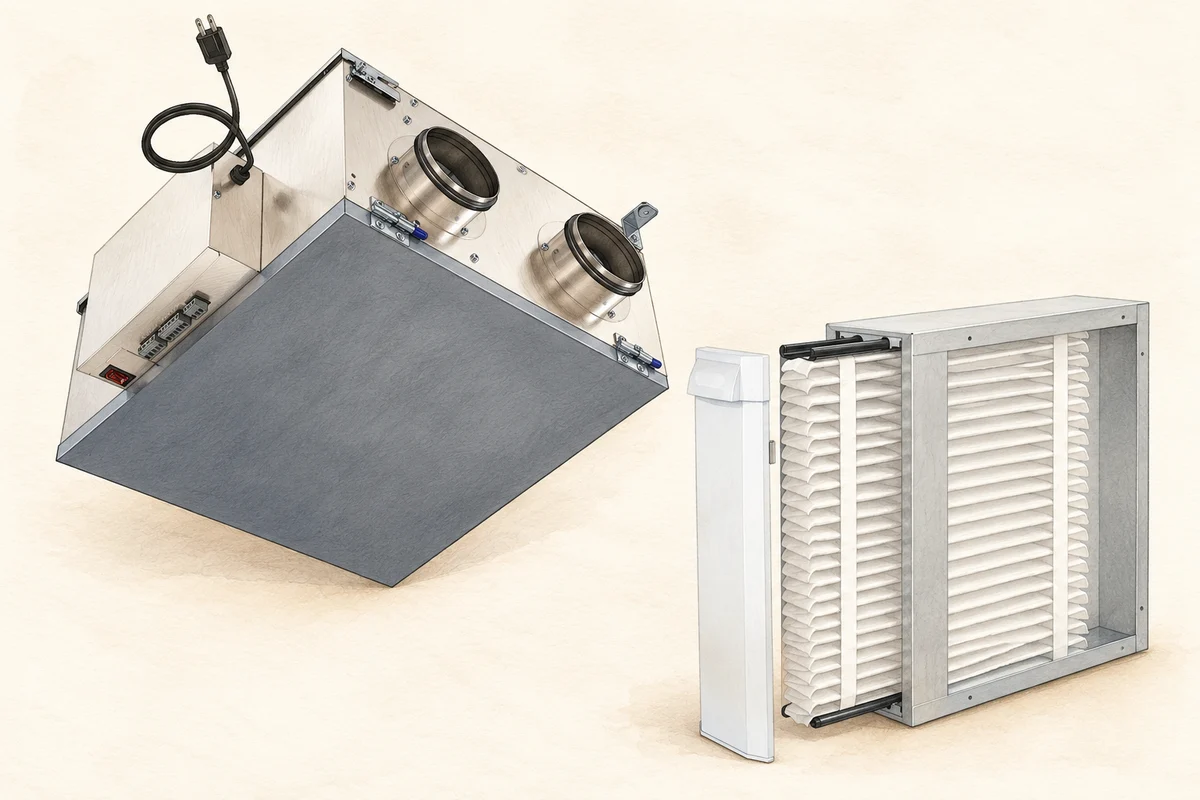
A particle filter or portable air cleaner captures particles as air passes through it. A portable unit is generally sized for a room or area, while an HVAC filter operates with the home’s air-distribution system.
EPA advises matching a portable air cleaner’s clean-air delivery rate to the room. Particle capture does not automatically mean a device removes gases or solves moisture problems.
When does your home need more fresh air?
Ventilation removes or dilutes indoor pollutants with outdoor air. Many residential forced-air systems mainly recirculate indoor air and do not have a dedicated outdoor-air supply.
Outdoor conditions matter too. Opening windows when there is outdoor smoke or poor air quality may worsen the problem. Mechanical ventilation needs to be planned around the home and existing equipment.
Ask what will help in your home
Tell RJ Sam’s which rooms feel uncomfortable and which activities or seasons make it worse. We can explain how filtration, exhaust, ventilation or moisture control relates to what you have noticed.
Ask what a proposed device handles, what it does not handle and what maintenance it requires. A useful recommendation connects the equipment to the concern rather than promising to remove every pollutant.