Start with the thermostat
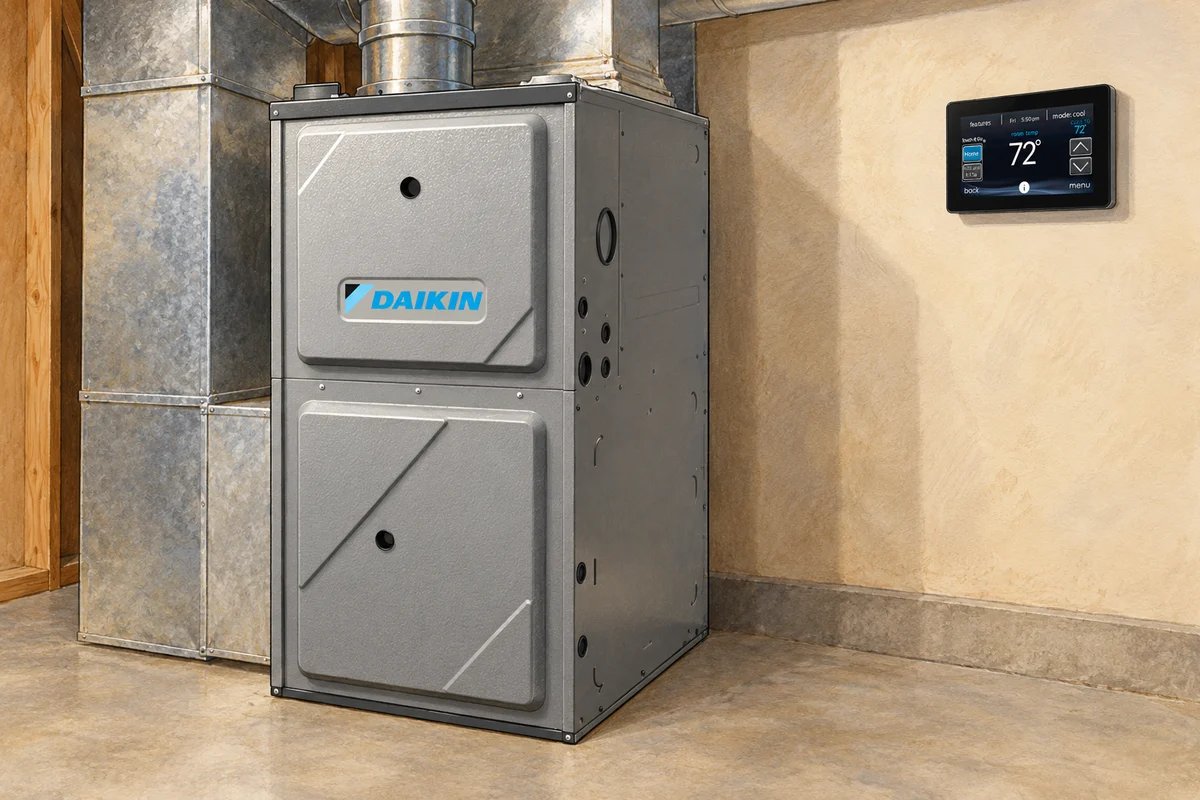
Check whether the thermostat is in heating mode and the setting is above the room temperature. Look for a changed schedule, low-battery notice or visible error message. Record what the screen says rather than trying unfamiliar installer settings.
Notice whether the system never starts, starts and stops, or runs while the house stays cold. These are different patterns, and each gives a technician a useful starting point.
Feel the airflow
A loaded filter or an obstructed return can affect airflow. Check a filter only if it is safely accessible and the equipment instructions explain how. Keep furniture and rugs clear of supply and return openings.
If one bedroom is cold while the rest of the house is comfortable, describe that room and when the problem occurs. The ductwork and room conditions may need attention alongside the furnace.
Leave equipment testing to the technician
Do not open burner compartments, bypass switches or repeatedly reset a system that shuts down. Electrical, fuel and combustion checks require appropriate testing. For a gas smell or carbon-monoxide alarm, leave the building and contact emergency services or the gas utility from outside.
ENERGY STAR identifies controls, electrical connections and heating-specific checks as parts of professional maintenance. Those checks help distinguish a control problem from an airflow or equipment problem.
Tell us what you’ve observed
You do not need a model number or a diagnosis to request help. Tell RJ Sam’s which rooms are cold, when heating last worked and what happens when the system tries to start. We work across brands and explain the findings and repair price before you approve work.