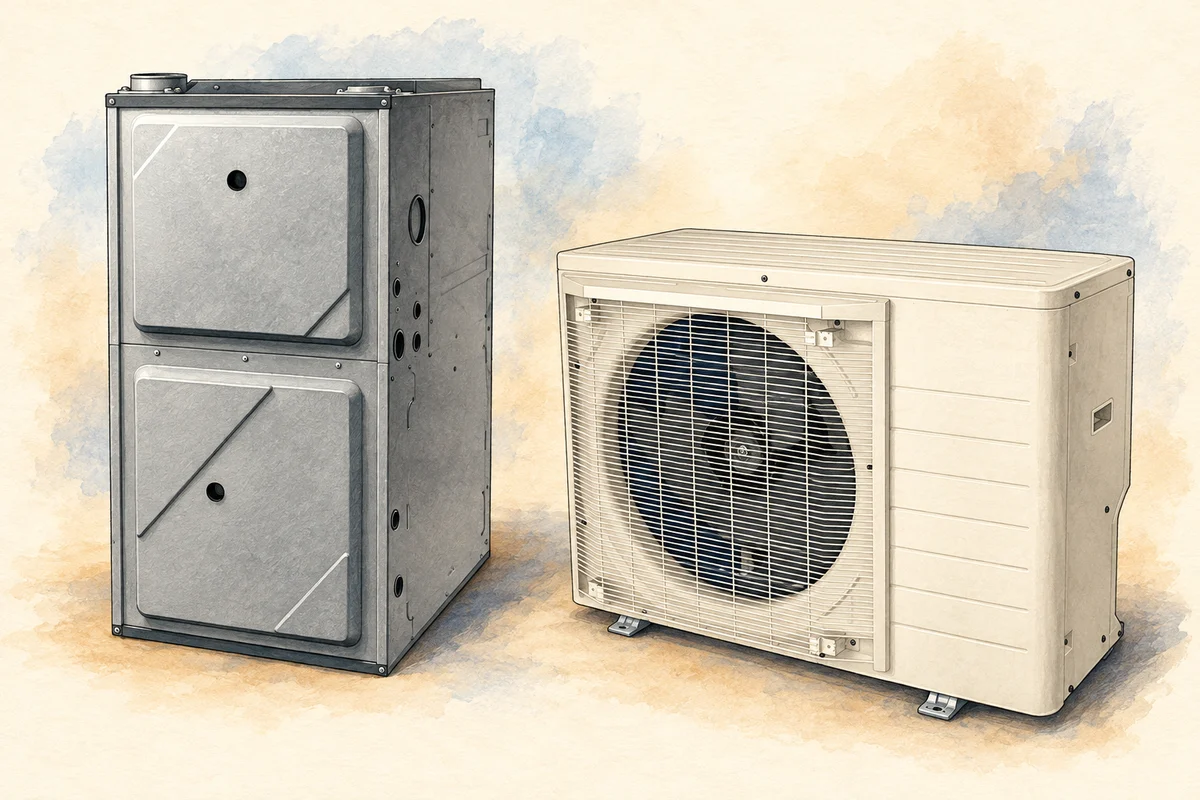
How they heat your home
A fuel-burning furnace creates heat and distributes warm air through ducts. An air-source heat pump moves heat between outdoors and indoors, providing heating in winter and cooling in summer. A heat pump can serve ducts or individual indoor units.
Equipment labels alone do not tell you which arrangement fits your house. Existing fuel supply, ducts, electrical service and the condition of the cooling system all affect the comparison.
Ask about cold-weather performance
Heat-pump performance needs to be assessed for the temperatures your home will face. ENERGY STAR recommends equipment sizing based on the home’s heating and cooling needs and consideration of backup heat where appropriate.
Ask how the proposed system maintains comfort in colder weather, how backup heating operates and how the thermostat controls it. A familiar brand name or a large capacity number is not a substitute for that explanation.
Which rooms are hard to heat?
A larger replacement does not automatically solve a cold bedroom. Duct leaks, restricted airflow and room heat loss can remain after equipment changes. Describe rooms that are uncomfortable before comparing proposals.
The assessment should connect the equipment choice to the home’s needs. Ask which duct, electrical, drainage, venting or control changes are included in the price.
What’s included in each quote?
Compare installed scope, operating assumptions, maintenance access and warranty terms. Request a clear explanation of reasonable repair and replacement options. Avoid treating a general online savings estimate as a prediction for your household.
RJ Sam’s can assess the equipment you already have and explain the options across brands, including how each proposal addresses your comfort concern.