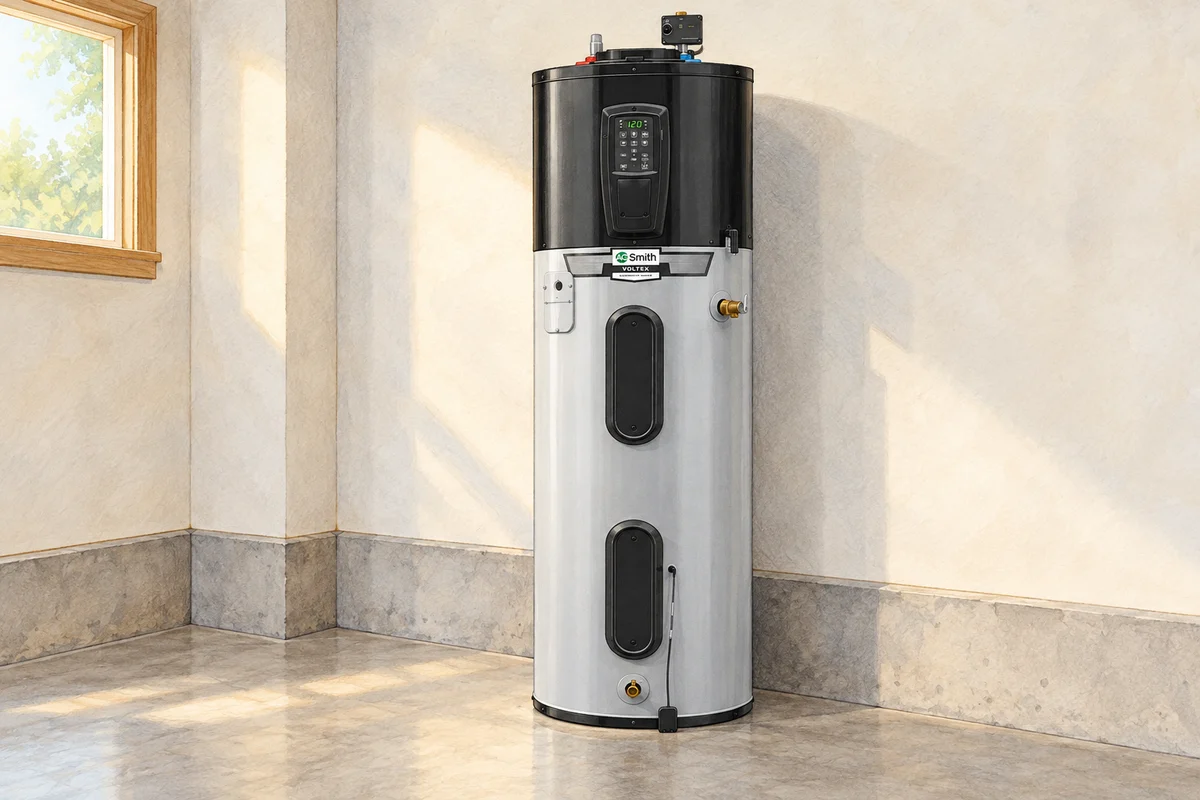
How a heat-pump water heater works
A heat-pump water heater uses heat from surrounding air to help heat stored water. Many models also have electric resistance elements for backup or higher-demand operation. You may see these products described as hybrid electric water heaters.
Because the unit interacts with the room air, the installation space affects performance. The replacement is more than a question of whether the tank fits through the door.
Check the space and connections it needs
Ask the installer to check room temperature, available air volume, clearances, ceiling height and service access against the selected model’s instructions. A confined closet may require a specific airflow arrangement.
Also discuss condensate drainage, electrical supply and the path for bringing the equipment into the home. These supporting tasks should be included in the proposed scope rather than assumed.
Will it change how the room feels?
ENERGY STAR notes that a heat-pump water heater can cool and dehumidify the space around it. Consider the room’s use and ask about operating sound, air discharge and performance during colder conditions.
A basement equipment area and a closet beside a bedroom present different planning questions. Describe the space and nearby rooms so the installer can evaluate the arrangement.
Will it meet your hot-water needs?
Explain the household’s busiest hot-water period and any expected changes in use. Ask how the chosen capacity and operating modes meet that demand, including when backup heating may be needed.
RJ Sam’s can compare a heat-pump water heater with other suitable options and explain the installation work, maintenance and controls. Request a complete proposal before deciding.