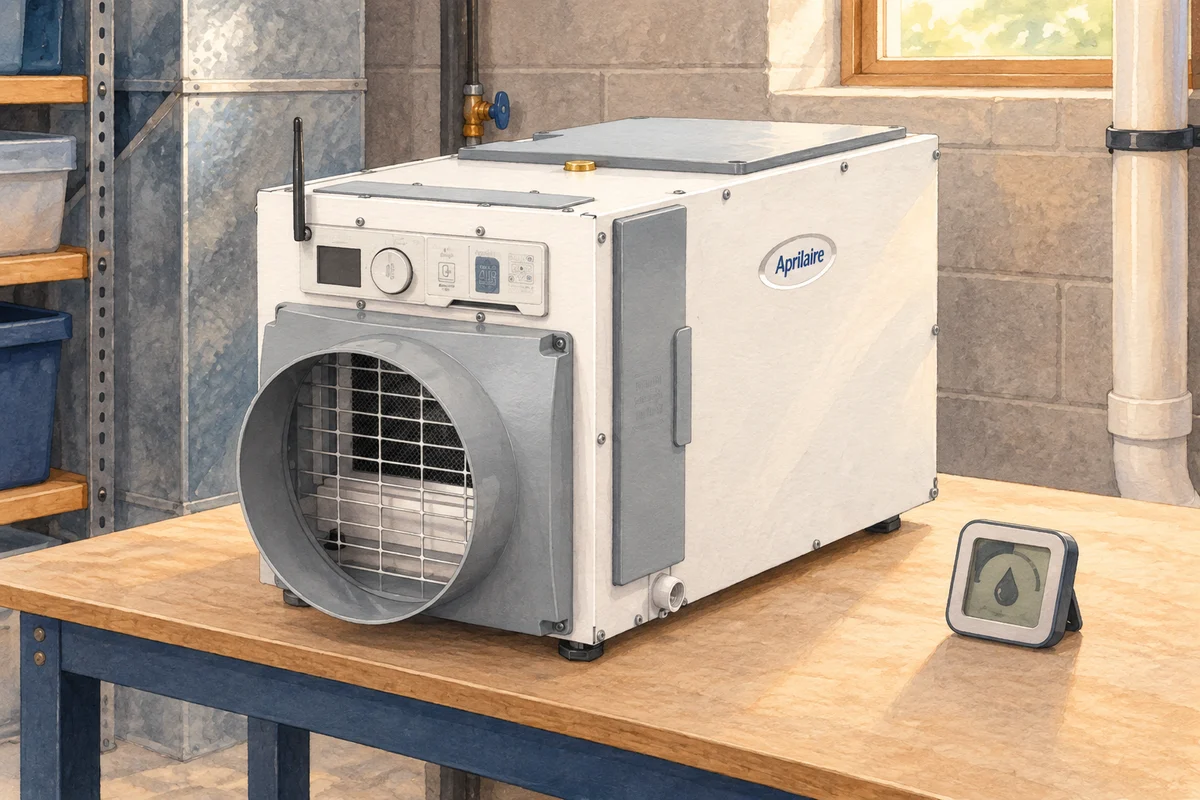
Measure before choosing equipment
A small humidity meter can help show how conditions change between rooms and times of day. Note readings near the uncomfortable area and whether the issue follows showers, cooking, rainy weather or heating-season changes.
EPA recommends keeping indoor relative humidity below 60%, ideally between 30% and 50% when possible. The appropriate setting also needs to account for the home, season and condensation on cold surfaces.
Look for the moisture source
A plumbing leak, outdoor water entry or poor exhaust can keep an area damp. A dehumidifier does not repair those conditions. Addressing the water source is central to moisture control.
Notice whether bathroom or kitchen exhaust actually vents outdoors. If a basement stays damp, tell the technician where moisture first appears and whether walls or floors are visibly wet.
Consider the HVAC system
Cooling operation and airflow can affect moisture removal. A home can reach the thermostat setting and still feel clammy, so lowering the setting may not resolve the underlying cause.
Dry winter air raises a different question. Humidification needs appropriate controls and an understanding of the home’s condensation limits rather than simply selecting the highest humidity setting.
Find out what will help your home
Explain the rooms affected, the readings you have and any visible condensation. RJ Sam’s can assess the equipment and discuss humidity-control options where they apply.
Visible water damage or recurring mold calls for attention to the moisture problem and appropriate cleanup. New equipment should support that work rather than substitute for fixing the source.