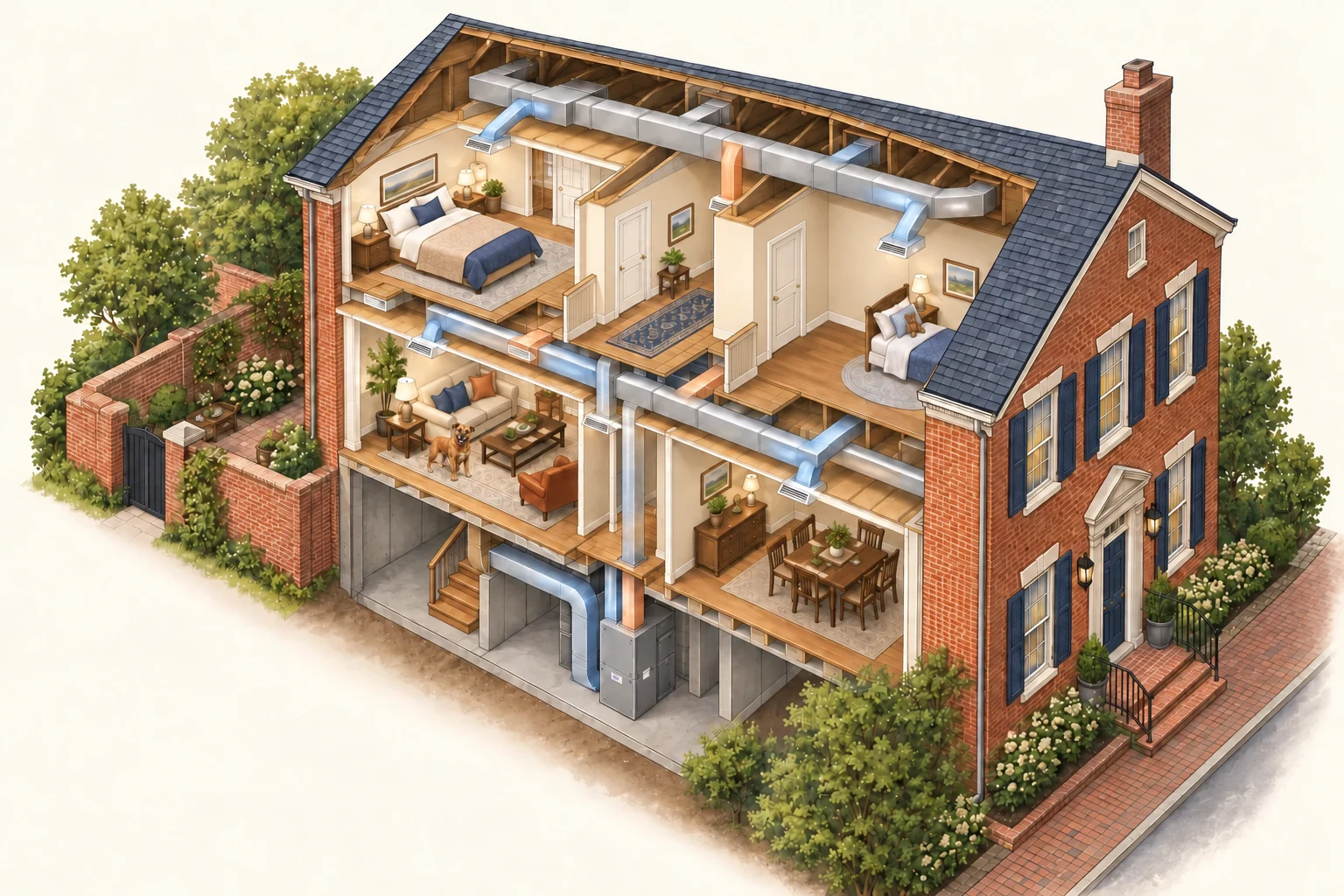
Why the top floor gets so hot
Windows, insulation and air leakage affect how much heat enters upper rooms. A room under the roof can need a different amount of cooling from one sheltered between conditioned floors.
Is enough cool air reaching upstairs?
Long or restricted ducts, leaks and limited return-air paths can reduce cooling delivered to a room. A closed bedroom door can change airflow when there is no suitable return path.
Review those conditions before increasing equipment size.
What the downstairs thermostat measures
The system responds to the temperature at the thermostat. A remote sensor can provide information from another room, but it cannot add duct capacity.
Properly designed zoning or a dedicated room system may help in some homes. The existing equipment and ducts need review first.
What to look for before an upstairs cooling visit
Keep supply and return grilles unobstructed. Avoid closing several downstairs vents as a permanent fix; that can increase resistance and affect system operation.
- Which rooms run hot and at what time of day?
- Are bedroom doors open or closed?
- What is the downstairs temperature doing at the same time?
Compare airflow work with ductless cooling
An airflow correction or building improvement may address the concern. If the central system cannot serve the space well, compare a ductless unit with ductwork or equipment changes.
The recommendation should explain what each option changes, how much disruption it involves and how the result will be checked.